


Automotive Open & Short Circuit Finder – Non-Destructive Wire Tracer & Electrical Fault Locator for DC Systems Under 42V
Automotive Open & Short Circuit Finder – Non-Destructive Wire Tracer & Electrical Fault Locator for DC Systems Under 42V


BUY MORE, SAVE MORE
Couldn't load pickup availability
-
Ordered
- - -
Order Ready
- - -
Delivered

Automotive Open & Short Circuit Finder – Non-Destructive Wire Tracer & Electrical Fault Locator for DC Systems Under 42V
Automotive Electrical Fault Tracing
Stop Tearing Apart the Harness Just to Find One Bad Wire.
A hidden electrical fault can turn a 10-minute repair into hours of removing trim, unwrapping harness tape and checking wires one by one. This sender-and-receiver circuit finder helps you trace the target wiring path and narrow down suspected open or short circuit faults before you start pulling the vehicle apart.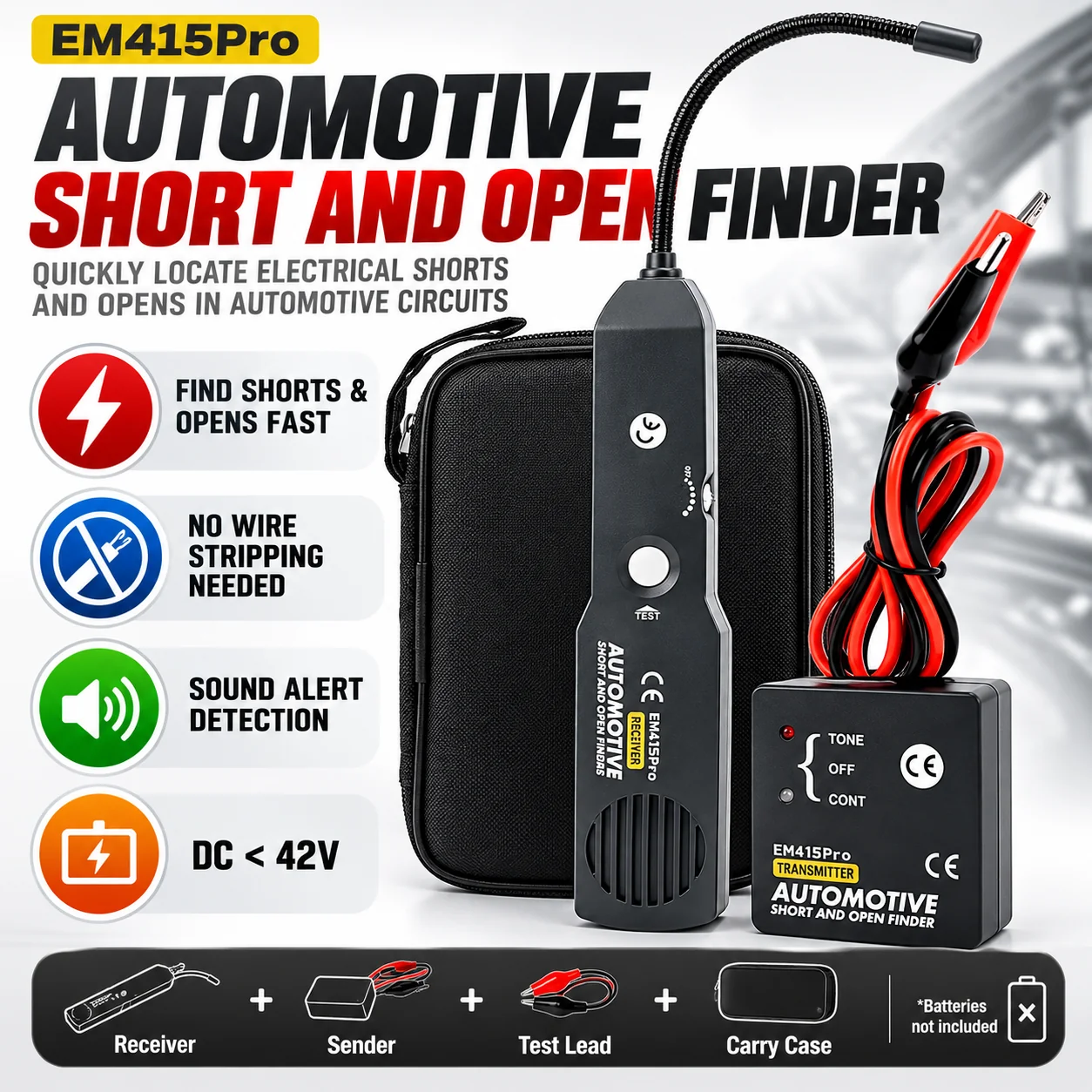
The Real Cost of an Electrical Fault
The Wire May Take Minutes to Repair. Finding It Can Take Hours.
The fuse blows. The light stops working. An accessory suddenly loses power. You know something is wrong — but the bad section may be buried inside a wrapped harness, behind the dashboard, under trim or several feet away from the component showing the symptom.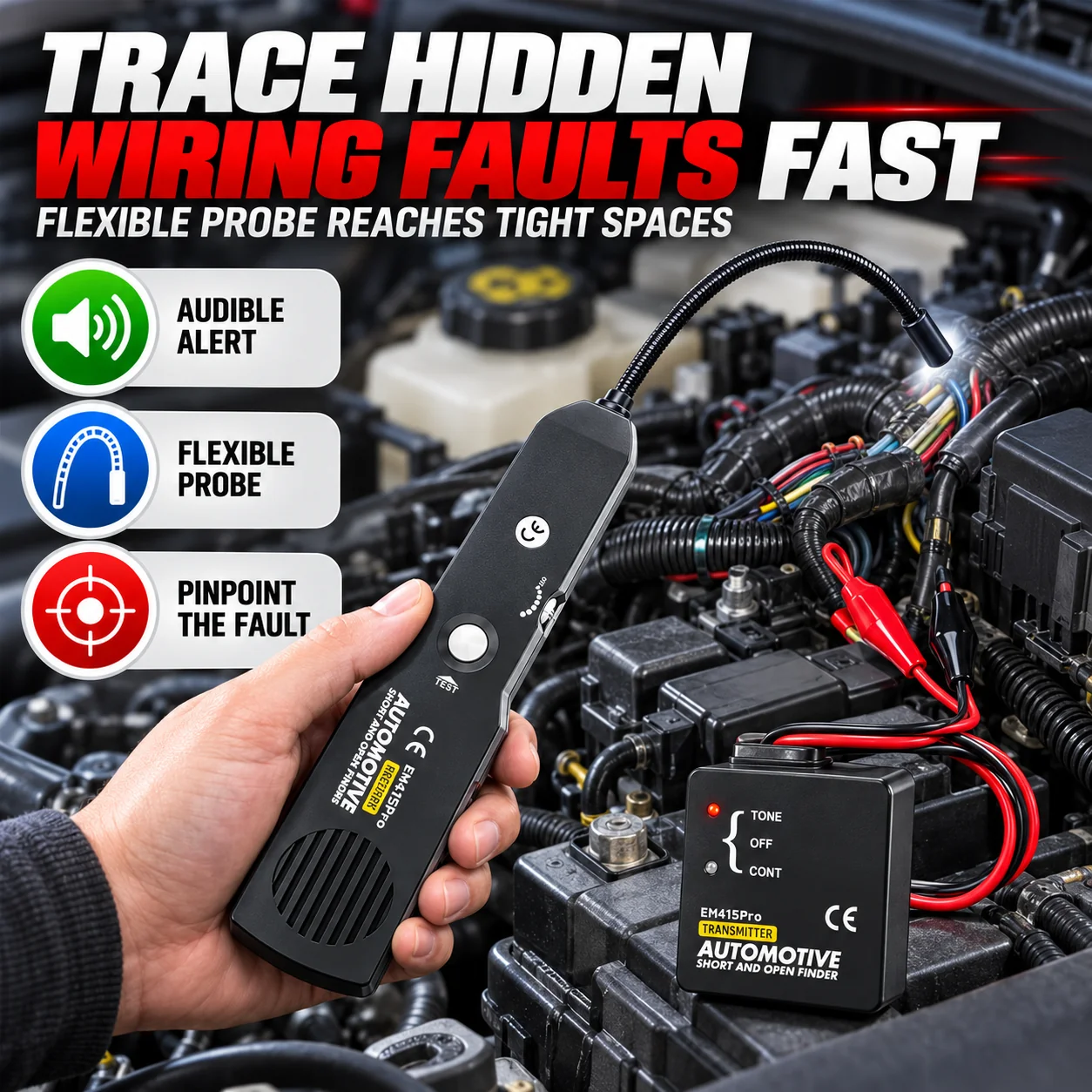
Hours Lost Chasing Wires
Following a hidden harness by eye can turn a simple fault into a long diagnostic job.
Opening the Wrong Section
Pulling tape, loom and insulation apart before locating the problem creates unnecessary work.
The Symptom Can Be Far Away
The component that stopped working does not automatically tell you where the damaged wire is located.
Send the Signal. Follow the Wire.
Trace the Circuit Before You Open the Harness.
Connect the transmitter to the circuit being investigated. It sends a tracing signal through the wiring path. Move the receiver probe along the harness and use the audible response to help follow the circuit and narrow the suspected fault area.
Transmitter
Introduces the tracing signal into the supported circuit you want to investigate.
Flexible Receiver Probe
Follow the target wiring route through crowded areas without opening every section first.
Audible Feedback
Listen to signal response while moving along the harness to help guide the search.
Don't Start by Cutting Everything Open
Keep the Harness Intact Until You Know Where to Look.
Instead of stripping insulation or unwrapping an entire loom just to find out whether the fault is even there, use the receiver to investigate the wire path externally first. Once the suspected area is narrowed down, you can focus physical inspection where it actually matters.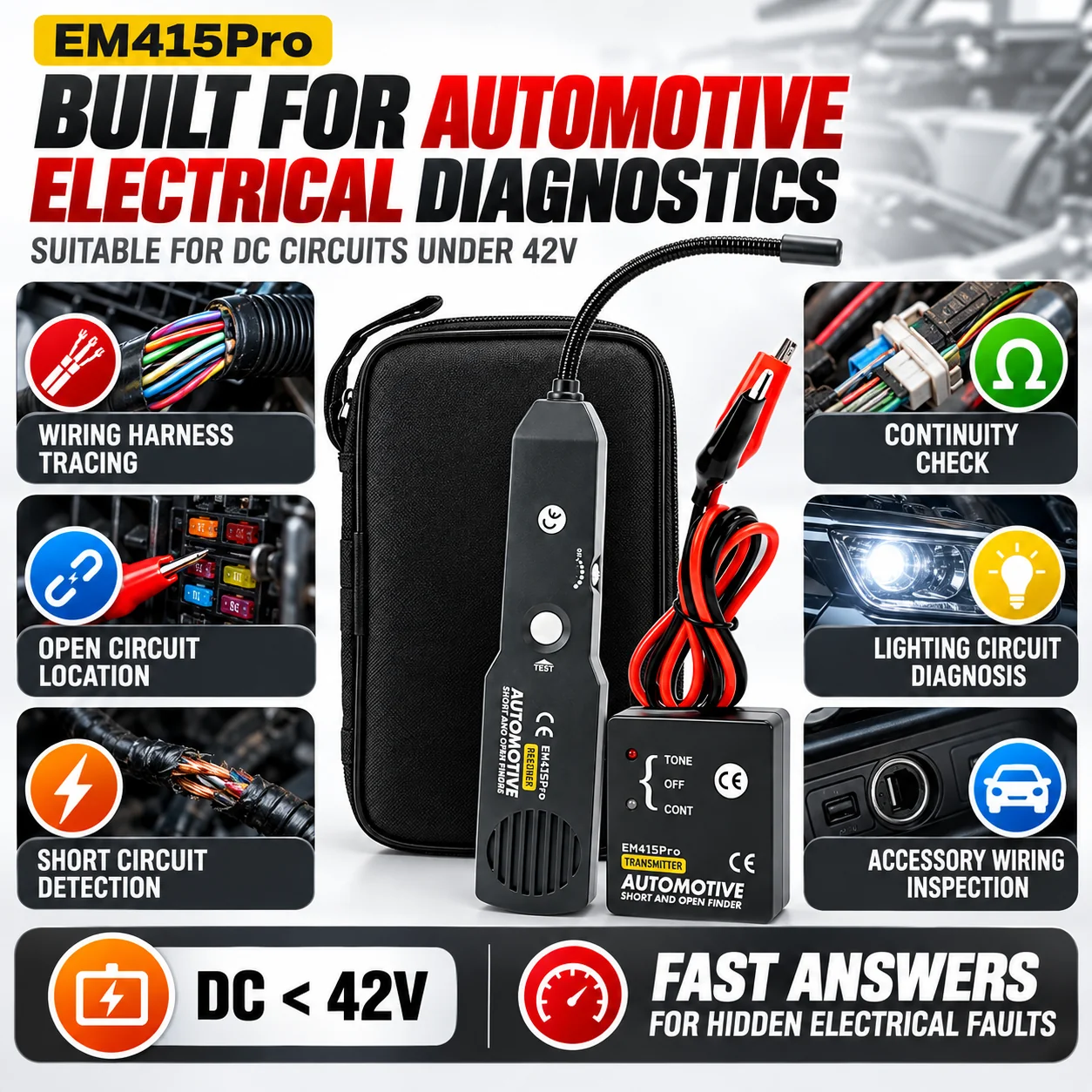
Non-Destructive Tracing
Helps follow the target signal without stripping the entire wire run.
Trace Through Harness Routes
Useful when the target wire disappears inside a larger bundled harness.
Open Only What You Need
Narrow the search first, then inspect the smaller suspected section.
Open Circuit Location
Follow the Circuit Until the Signal No Longer Behaves the Same.
A break in a wire may be hidden beneath tape, inside a loom or behind a panel. Trace the wiring path and use the receiver response to help narrow down where continuity may have been interrupted.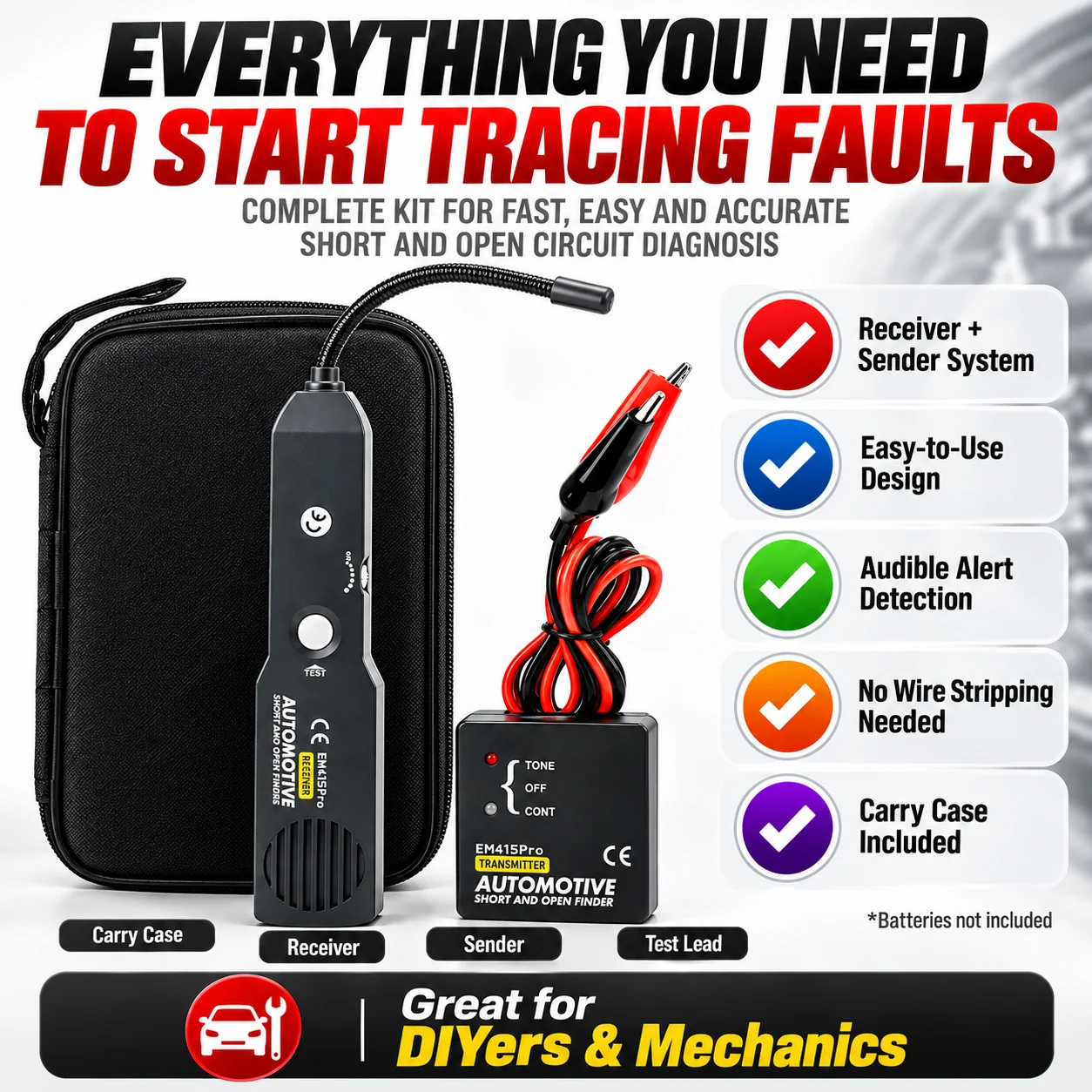
Broken Wire Search
Helps investigate supported circuits where the electrical path has been interrupted.
Follow Hidden Routing
Track the suspected circuit where direct visual inspection is difficult.
Reduce Blind Disassembly
Identify a smaller search area before removing unnecessary vehicle trim.
Short Circuit Tracing
Stop Guessing Which Hidden Section of the Harness Is Shorted.
Shorts often hide where wires rub against metal, bend around brackets, pass through tight spaces or become trapped behind panels. The tracing system helps reduce the amount of blind searching before the actual repair begins.
Short Circuit Search
Designed to assist with tracing suspected shorts in supported low-voltage DC wiring.
Diagnose Before Repairing
Narrow the suspected area before cutting, probing or replacing wiring.
Better Garage Workflow
Spend more time fixing the fault and less time searching randomly for it.
Follow the Signal More Easily
Adjustable Receiver Sensitivity Helps You Stay on the Target.
The handheld receiver includes a rotary sensitivity control, test button, flexible sensor probe and built-in buzzer, giving you straightforward controls while moving through the wiring route.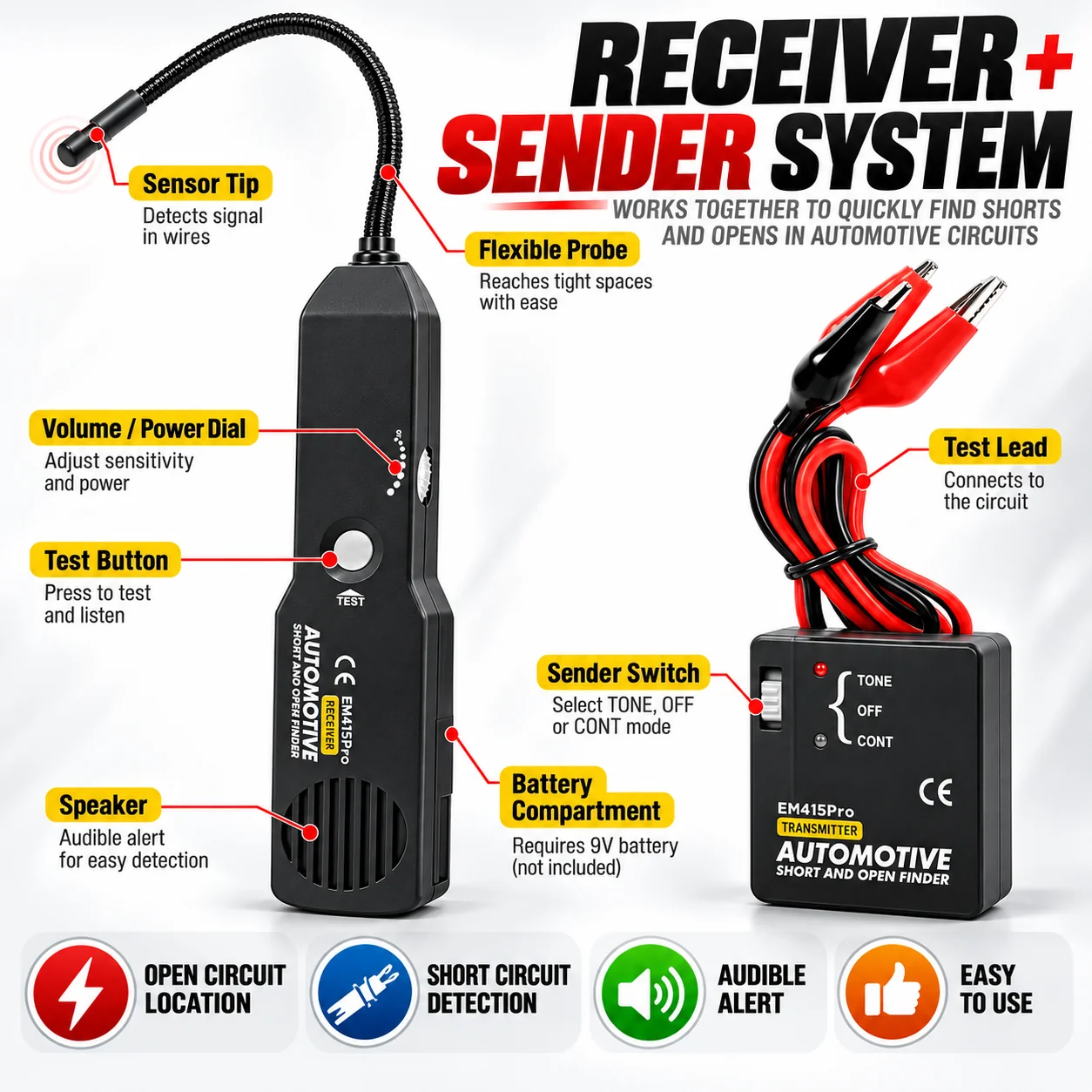
Rotary Sensitivity
Adjust the receiver as you work along the target wiring route.
Test Button
Simple front-mounted control for straightforward receiver operation.
Flexible Probe
Reach around crowded wiring, panels and engine-bay components.
Built-In Buzzer
Audible feedback lets you monitor the tracing response while you move.
Sender + Receiver Diagnostic System
One Unit Sends the Signal. The Other Helps You Follow It.
The transmitter provides TONE, OFF and CONT positions, while the receiver tracks the transmitted signal through the suspected wire path.
TONE
Used to generate the tracing signal for circuit tracking.
OFF
Center switch position for switching the transmitter off.
CONT
Continuity-related mode available on the transmitter.
A More Focused Diagnostic Workflow
Connect. Trace. Listen. Narrow It Down.
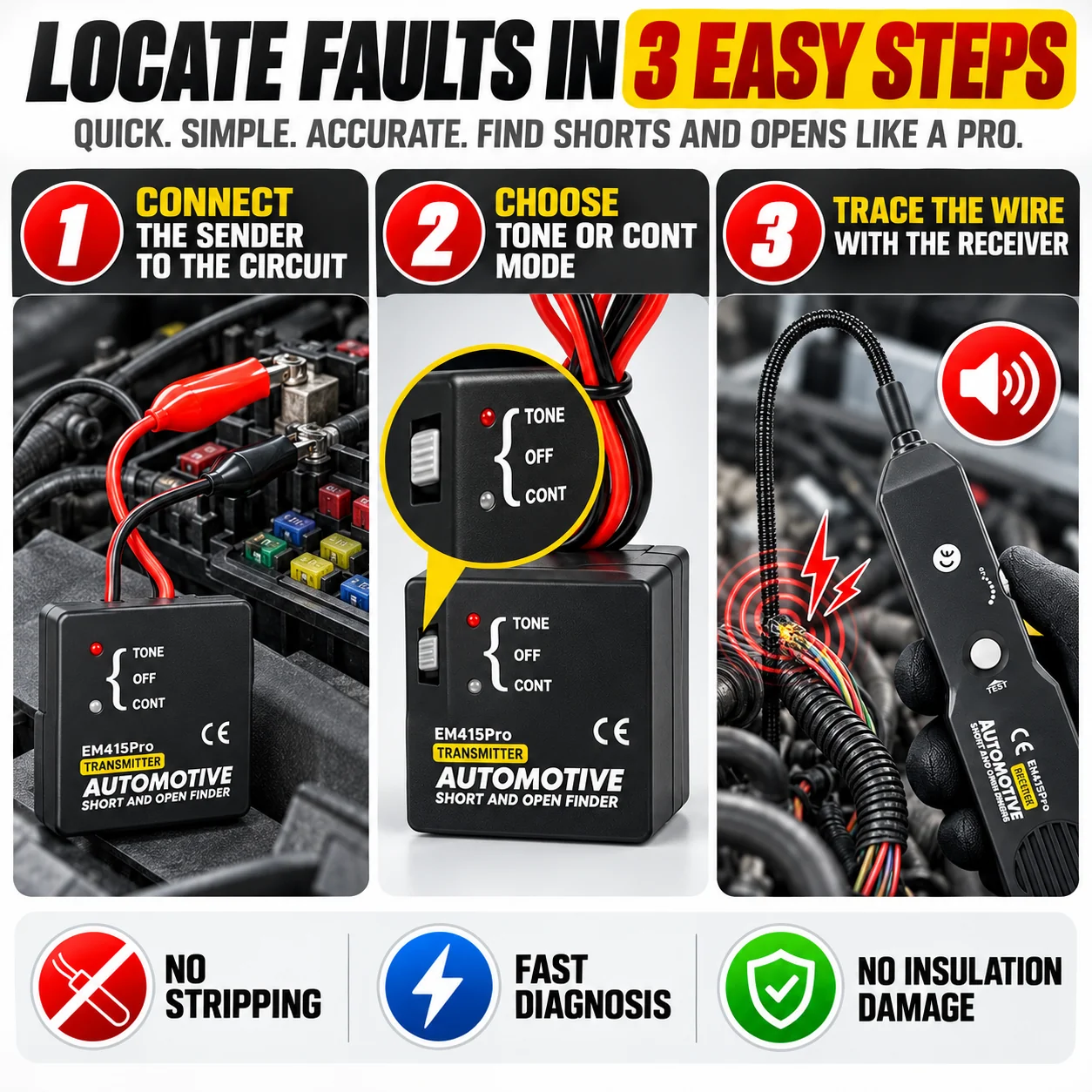
Identify the Circuit
Determine which supported low-voltage circuit needs investigation.
Connect the Transmitter
Connect the sender according to the operating instructions.
Trace the Harness
Move the receiver probe along the suspected wire path.
Narrow the Fault Area
Use signal response to focus further testing on a smaller area.
Built for Low-Voltage Vehicle Electrical Work
Useful Anywhere Hidden Wiring Turns Into a Time-Consuming Search.
Automotive Wiring
Trace supported low-voltage wiring throughout the vehicle.
Lighting Circuits
Investigate wiring routes associated with vehicle lighting faults.
Accessory Wiring
Follow supported accessory circuit wiring through hidden routes.
Garage Diagnostics
Useful for mechanics, technicians and experienced DIY users.
Compact Enough for the Diagnostic Bag
Flexible Reach Without a Bulky Tester.
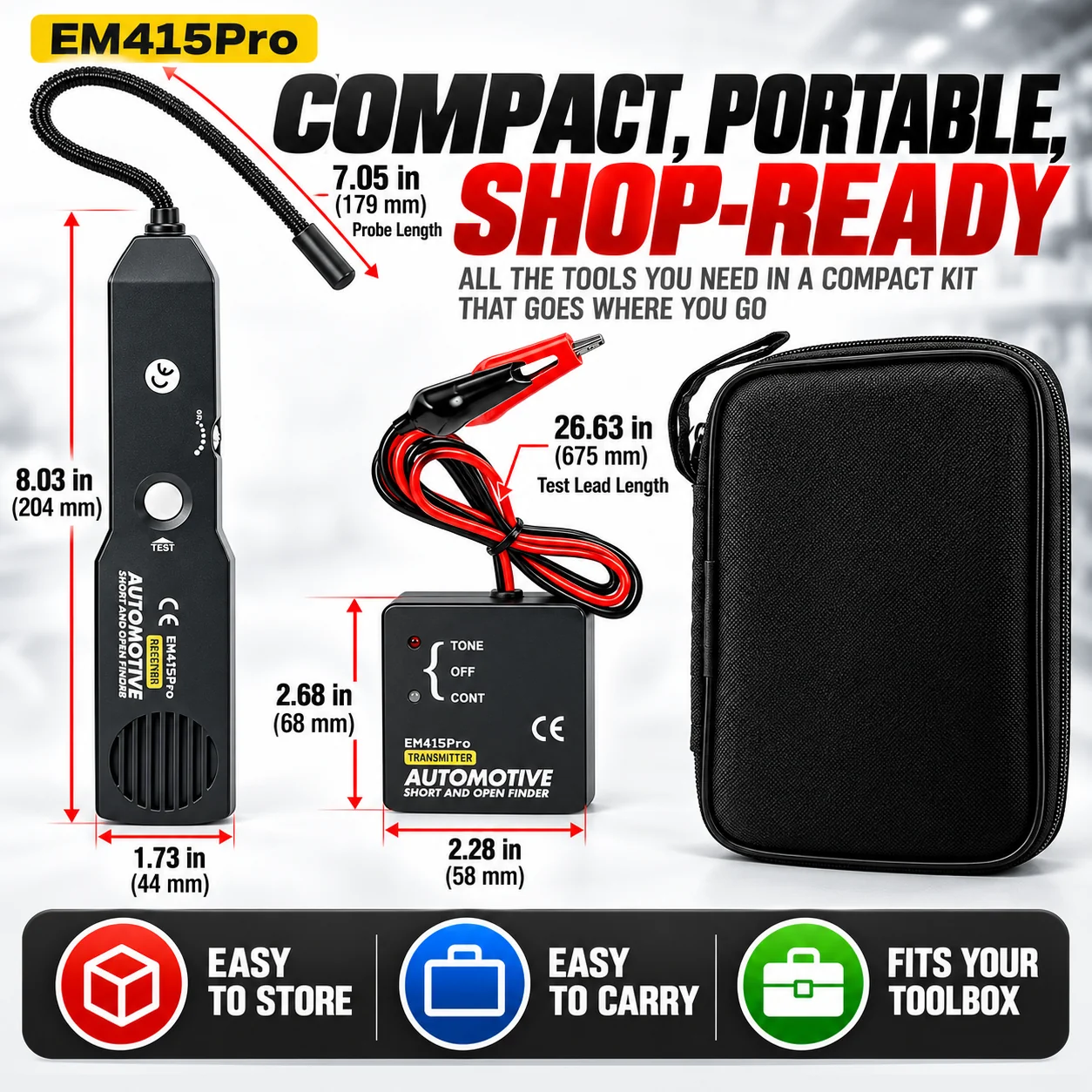
204 mm Receiver Body
Approx. 8.03 in
179 mm Flexible Probe
Approx. 7.05 in
675 mm Test Lead
Approx. 26.63 in
68 × 58 mm Transmitter
Approx. 2.68 × 2.28 in
Trace First. Disassemble Second.
Stop Turning One Electrical Fault Into a Full Interior Tear-Down.
Searching Without a Wire Tracer
Follow long harness routes visually
Remove panels just to see where wiring goes
Open loom before knowing where the problem is
Test multiple sections one at a time
Spend more time locating the fault than repairing it
Sender + Receiver Tracing
Send a traceable signal through the target circuit
Follow the route externally with the receiver
Use audible feedback to guide your search
Narrow suspected open and short circuit areas
Focus disassembly only where closer inspection is needed
What's Included
The Core Tools for Sending and Following the Signal.
Receiver
Handheld receiver with flexible sensor probe, test button, sensitivity control and buzzer.
Transmitter
Sends the tracing signal through the supported target circuit.
Test Lead & Clips
Red and black alligator clips for transmitter connection.
Storage Case
Keeps the tester components together inside the tool bag.
Frequently Asked Questions
Everything You Need to Know Before Tracing.
What is this tool designed to help locate?
It is designed to assist with tracing automotive wiring and narrowing down suspected open or short circuit faults in supported low-voltage DC systems.
Do I have to strip the entire wire harness?
No. The receiver is designed to follow the transmitted signal along the wiring path, allowing you to investigate externally before opening the suspected section.
What voltage systems can it be used with?
It is specified for DC electrical systems below 42 volts.
How does the receiver indicate the signal?
The receiver uses audible feedback from the built-in buzzer while you move the probe along the wiring path.
Can the receiver sensitivity be adjusted?
Yes. The receiver includes a rotary sensitivity control to help you work with the tracing signal.
Does the receiver require a battery?
Yes. The receiver uses a 9V battery. Battery is not included.
Is it only for professional mechanics?
It can be useful for automotive technicians, electricians, mechanics and experienced DIY users working on supported vehicle circuits.
Does it replace a multimeter?
It is primarily a tracing and fault-location aid. Final diagnosis should still be confirmed using appropriate electrical testing before repair.
Product Details
Automotive Open & Short Circuit Finder
Stop Guessing. Start Tracing.
Spend Less Time Hunting for the Fault — and More Time Fixing It.
Connect the transmitter. Follow the harness with the receiver. Listen to the signal. Narrow the search. Then open the wiring only where closer inspection is actually needed.


